Rendering glass without losing its lightness
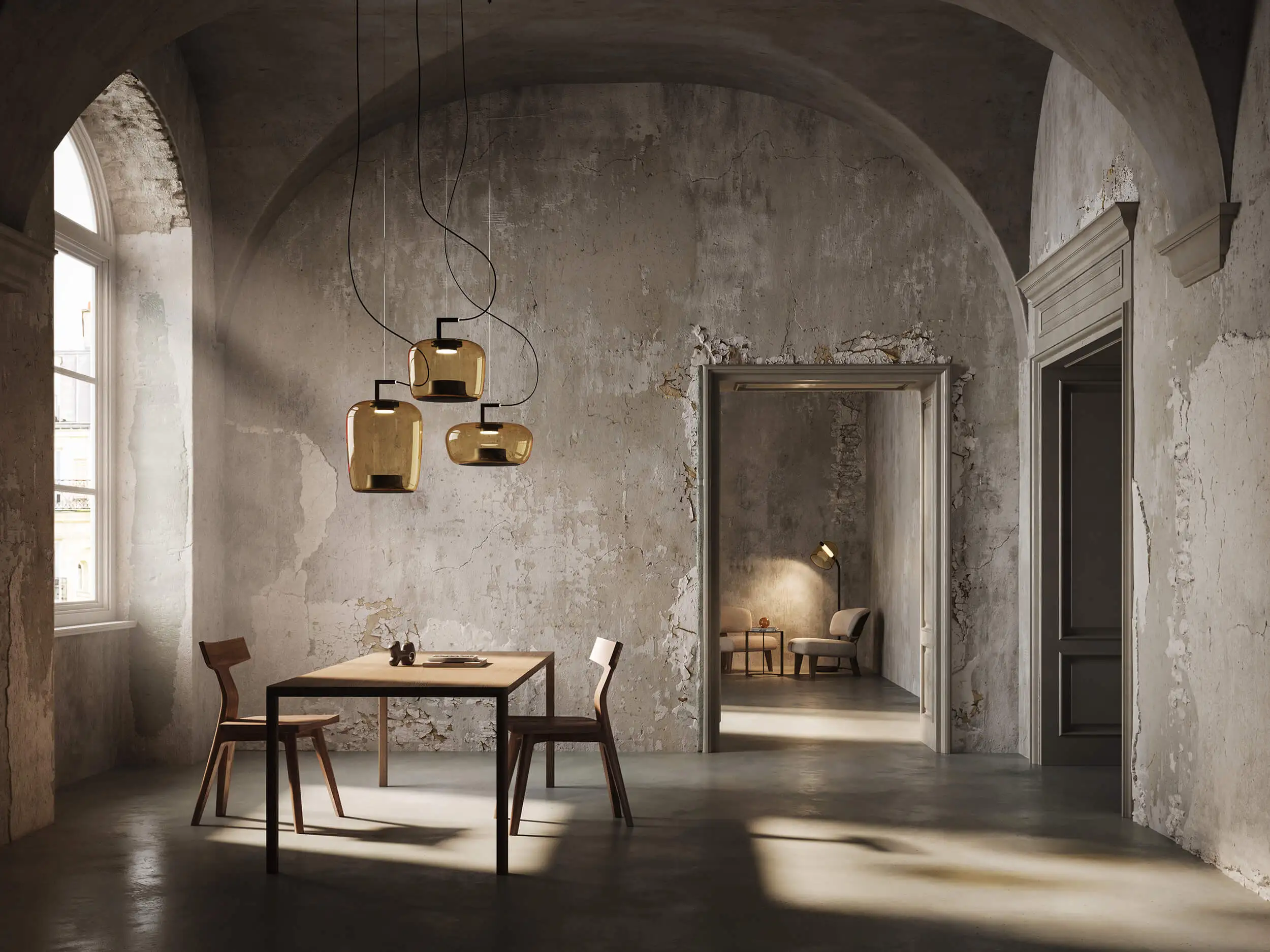
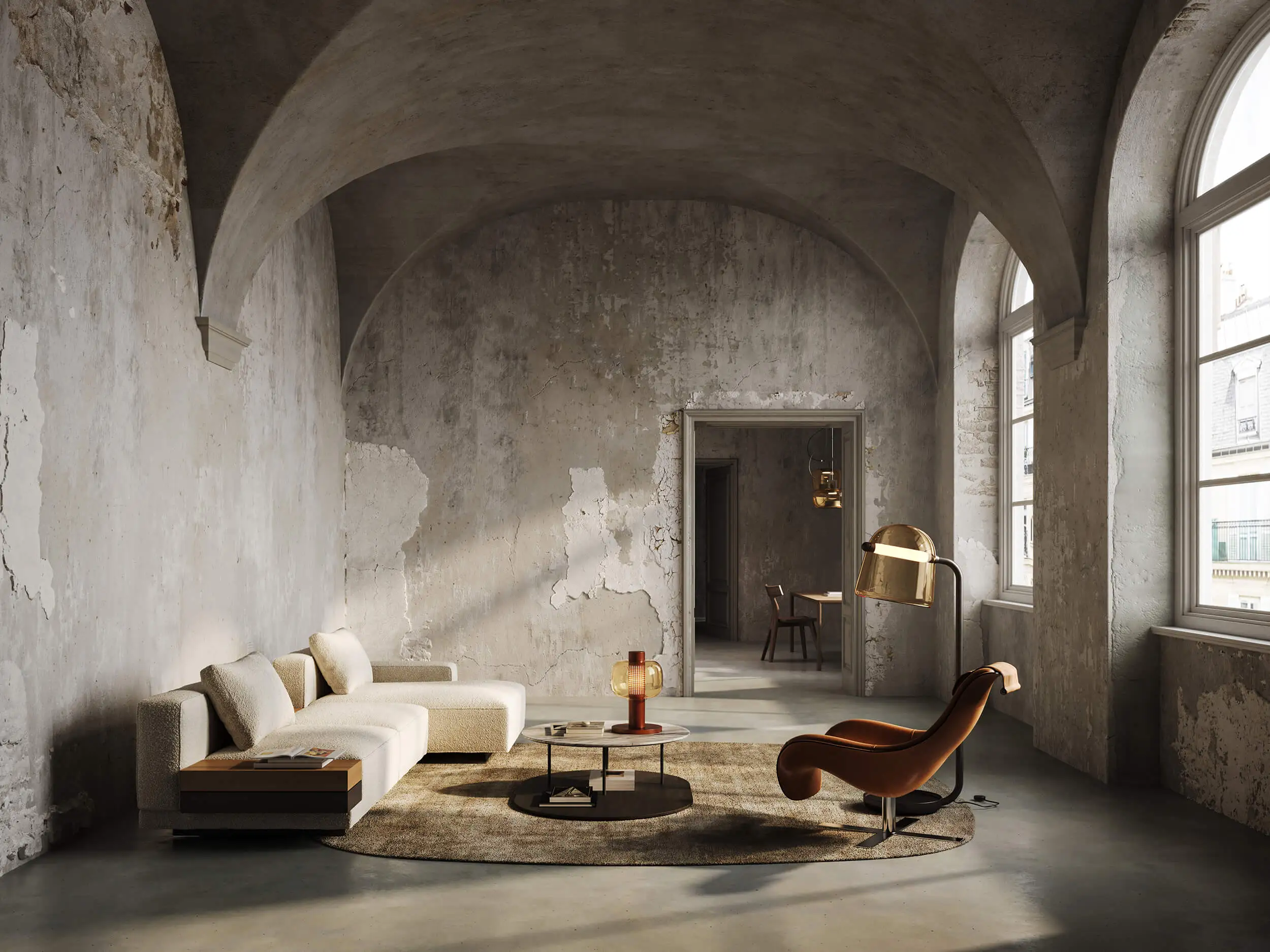
An image of a glass light fixture reveals more than its outline. Reflections, refraction and transparency shape how we see its form. For this case study, we modeled the Double and Bonbori lights and the Mona floor lamp by Brokis in 3D and placed them in an interior we designed. 3D modeling, material development and lighting work together: the fixture's details need to remain legible within the atmosphere of the room.
Double and Mona: between transparency and reflection
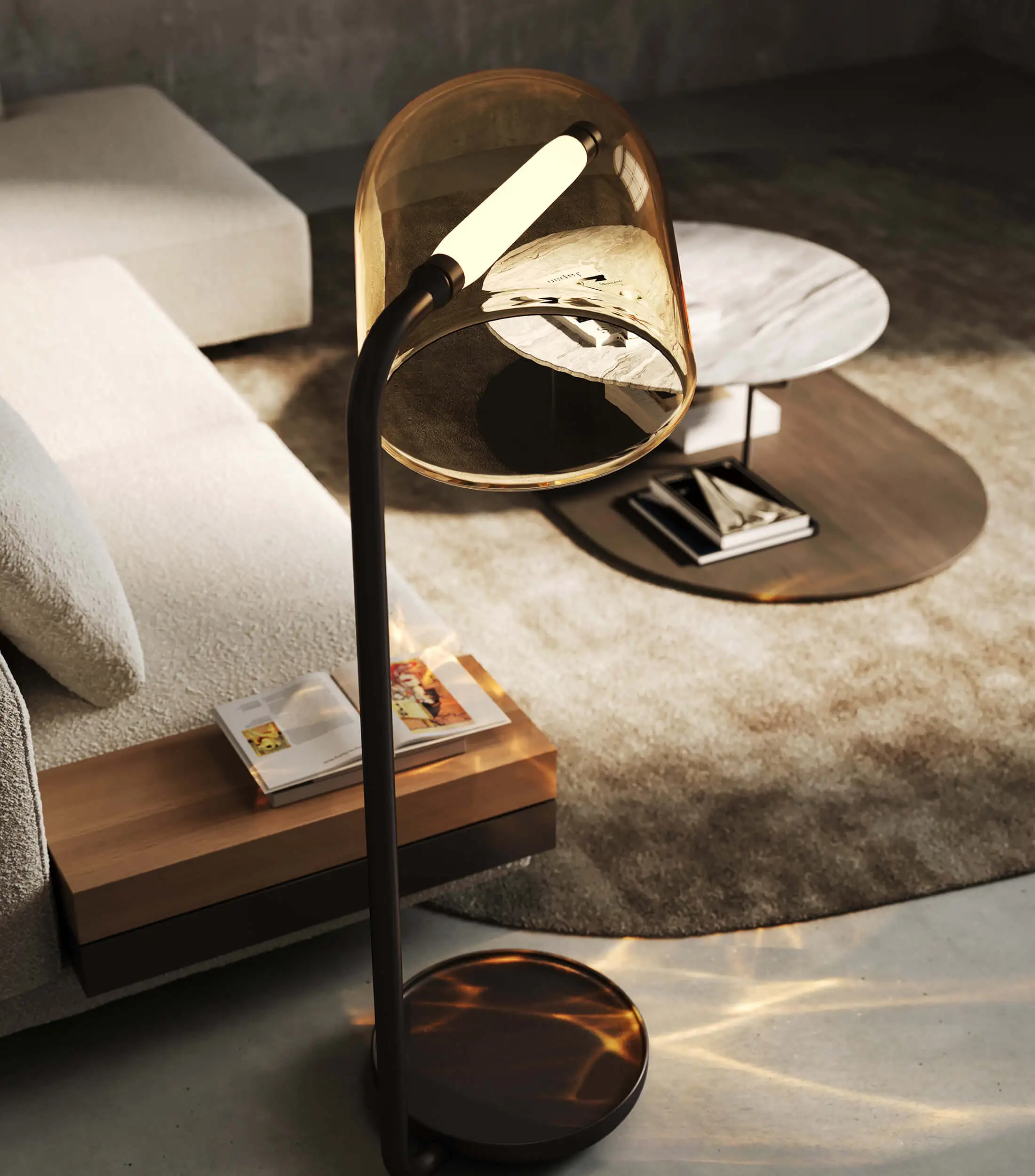
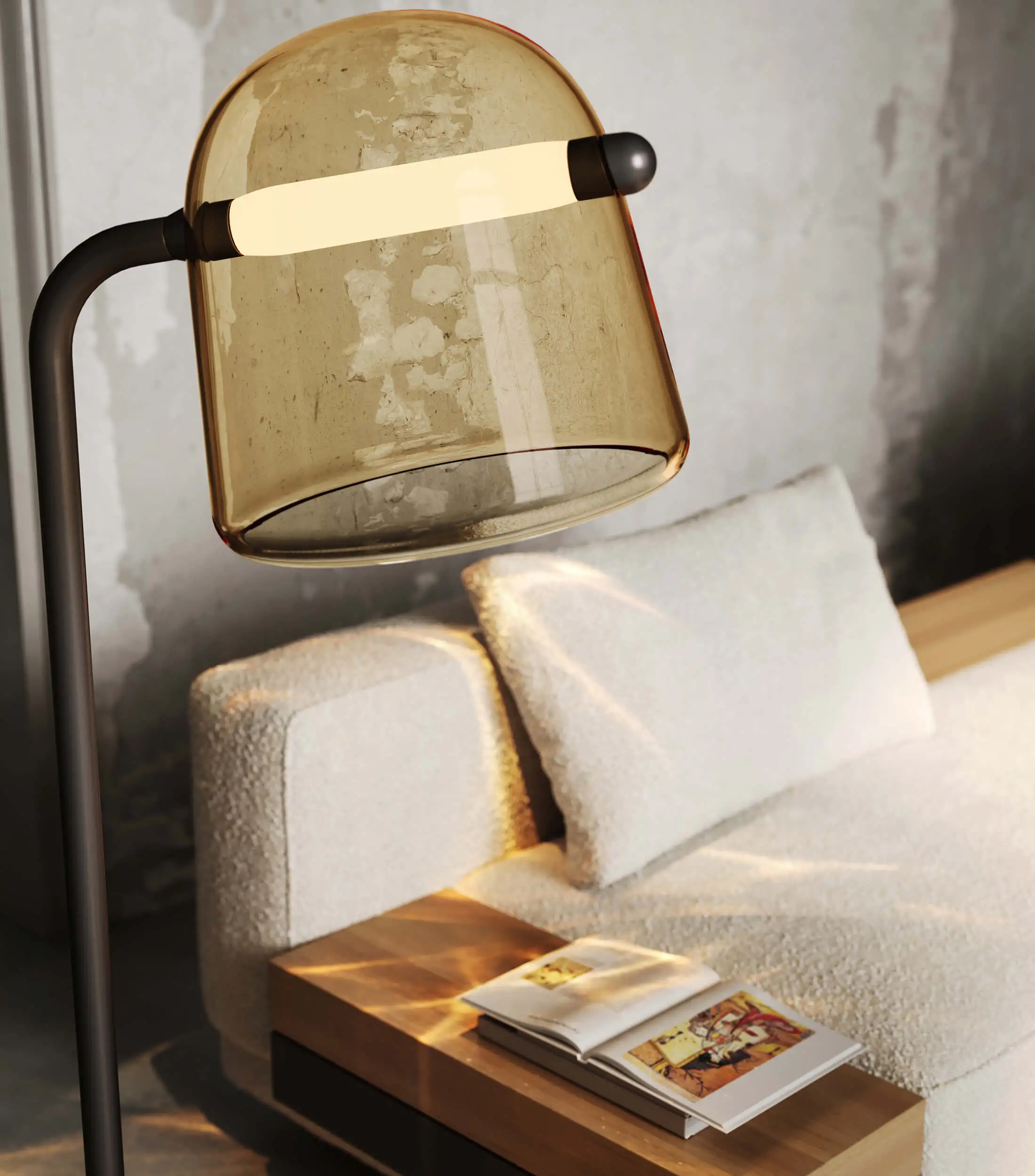
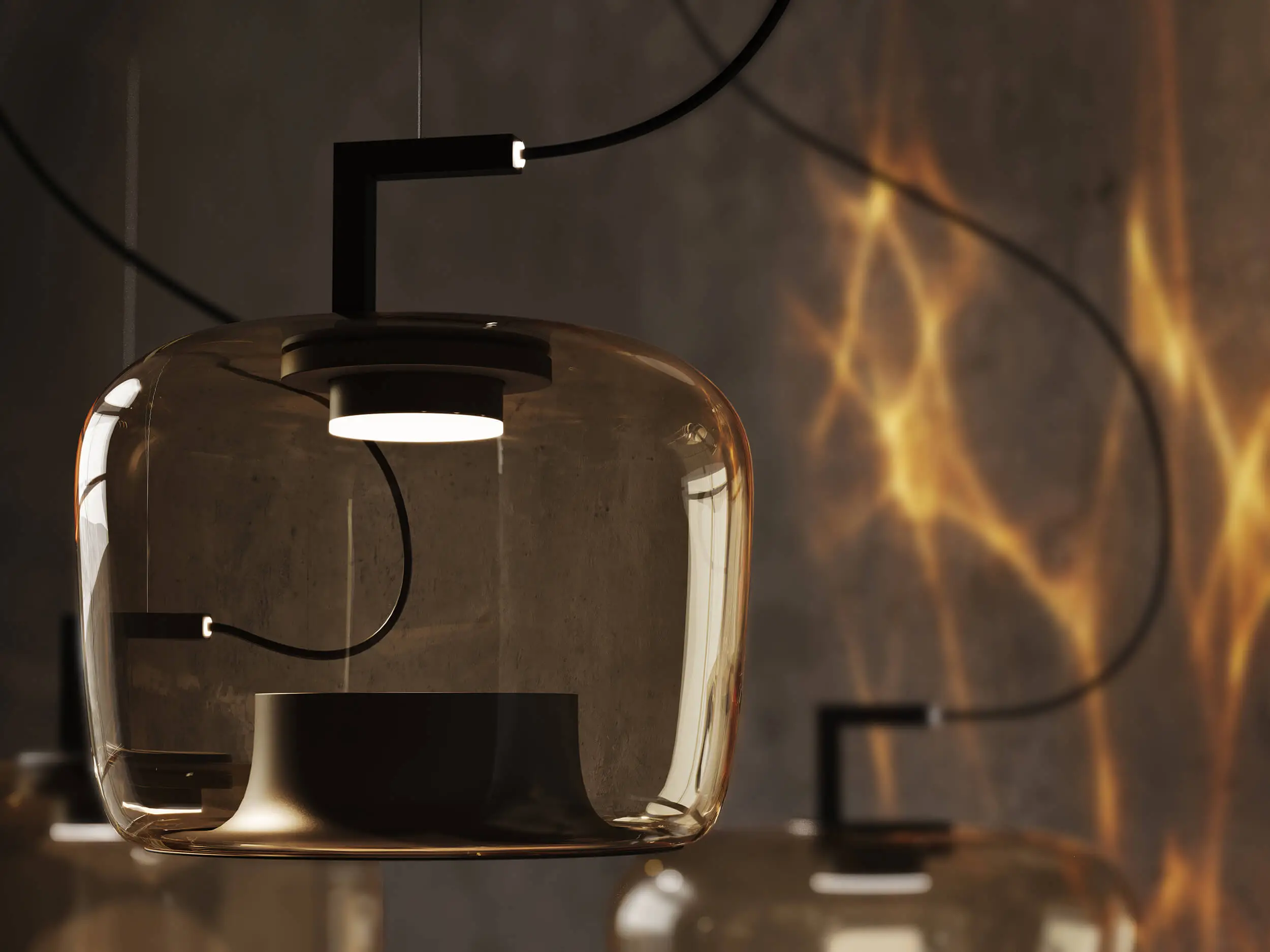
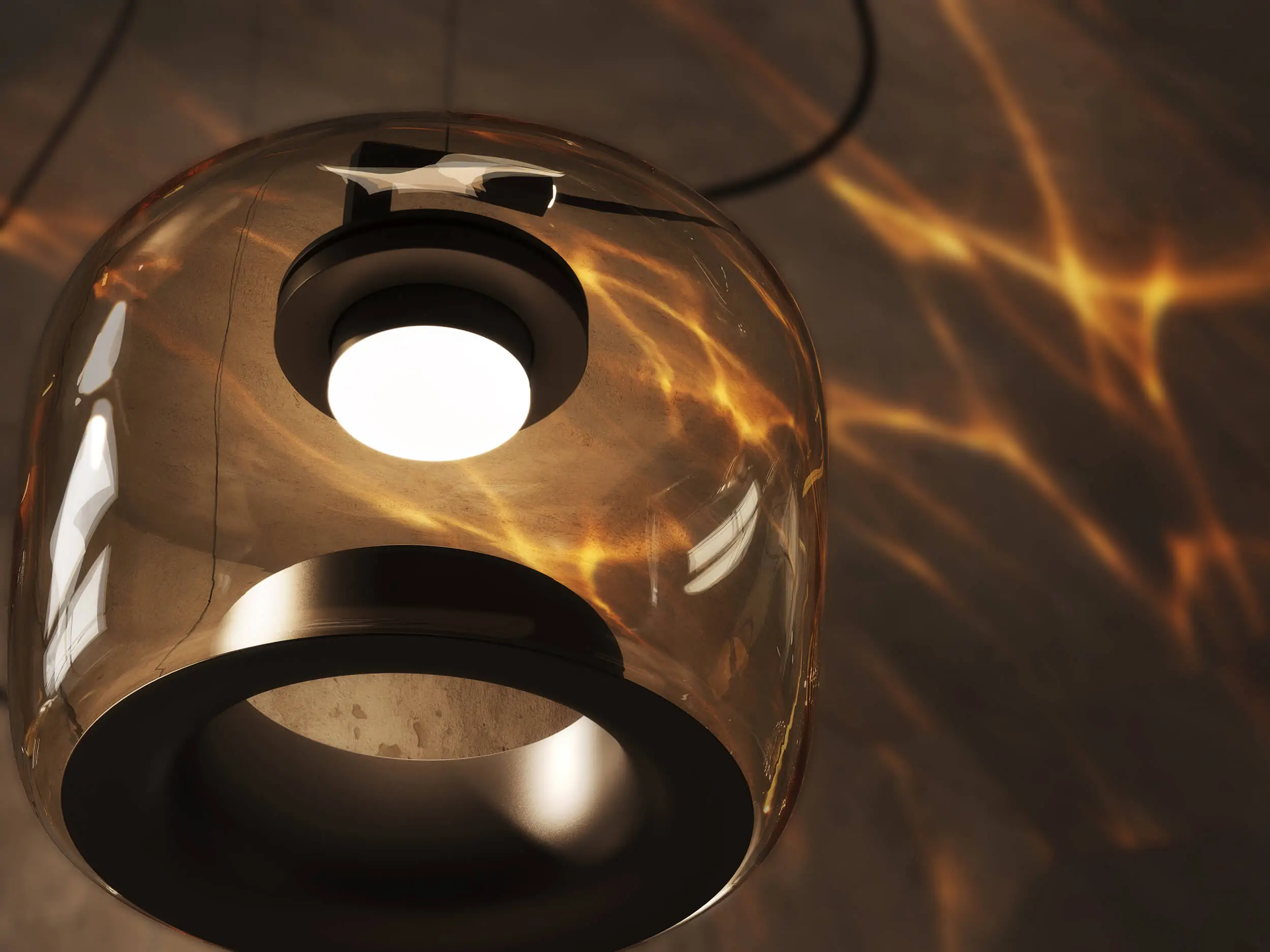
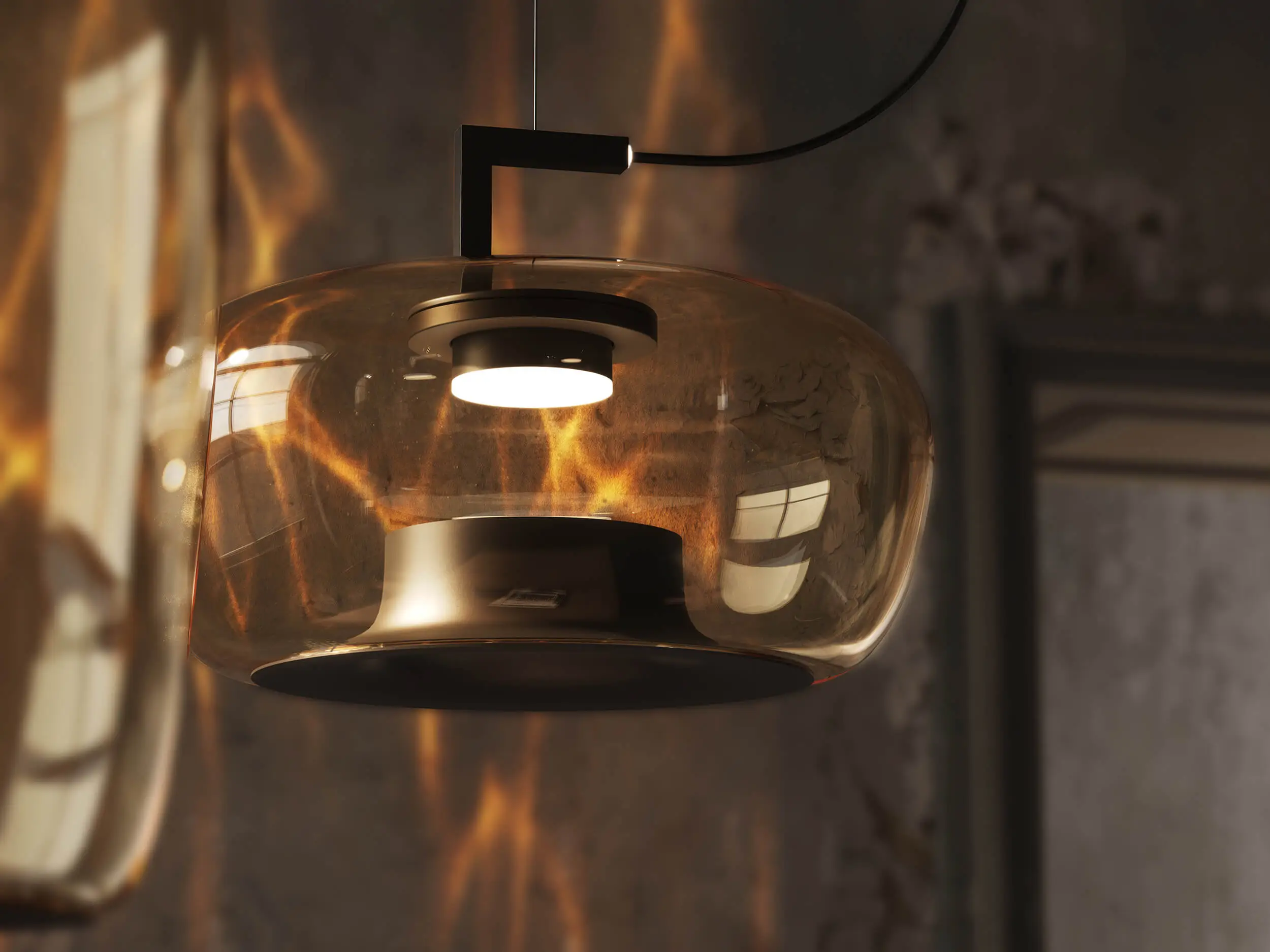
How much of the room reflects in the glass, and how much can be seen through it? For Double and Mona, we balanced refraction, reflections and the color of the glass. Edges and transitions help reveal its curvature and thickness in the image. In product rendering, that impression comes from geometry, materials and lighting working together.
Building the lights as 3D models
We modeled the Brokis fixtures for image production, including the curves of the glass shades, the metal supports and the transitions between materials. Room views and close-ups call for different levels of detail. These textured 3D models are built for visualization. They are not manufacturing drawings or a verification of the fixtures' lighting performance.
An interior inspired by an Italian palazzo
Terrazzo and walls with a weathered finish frame the fixtures. Their rough surfaces contrast with the glass and metal. The starting point was a visual concept that considers architecture, furnishings and product together. The camera angle determines how much of the room is visible and which part of the fixture's silhouette takes the lead.
Surfaces with distinct qualities
We developed textures and material settings for the images. Metal handles reflections differently from glass, and small irregularities change how light falls across a surface. Here, digitizing materials means working on the properties visible in the render: color, roughness, transparency and reflection. Close-ups reveal details that a wider room view cannot.
From individual fixtures to an image series
The finished series pairs close-ups with interior compositions. Light and shadow set the rhythm, while post-production brings the images together. This approach to CGI brand imagery presents lighting design through materials and atmosphere. It complements the technical product information without replacing it.