From fabric to setting: creating CGI imagery for Wittmann's Beletage
Wittmann: a culture of comfort
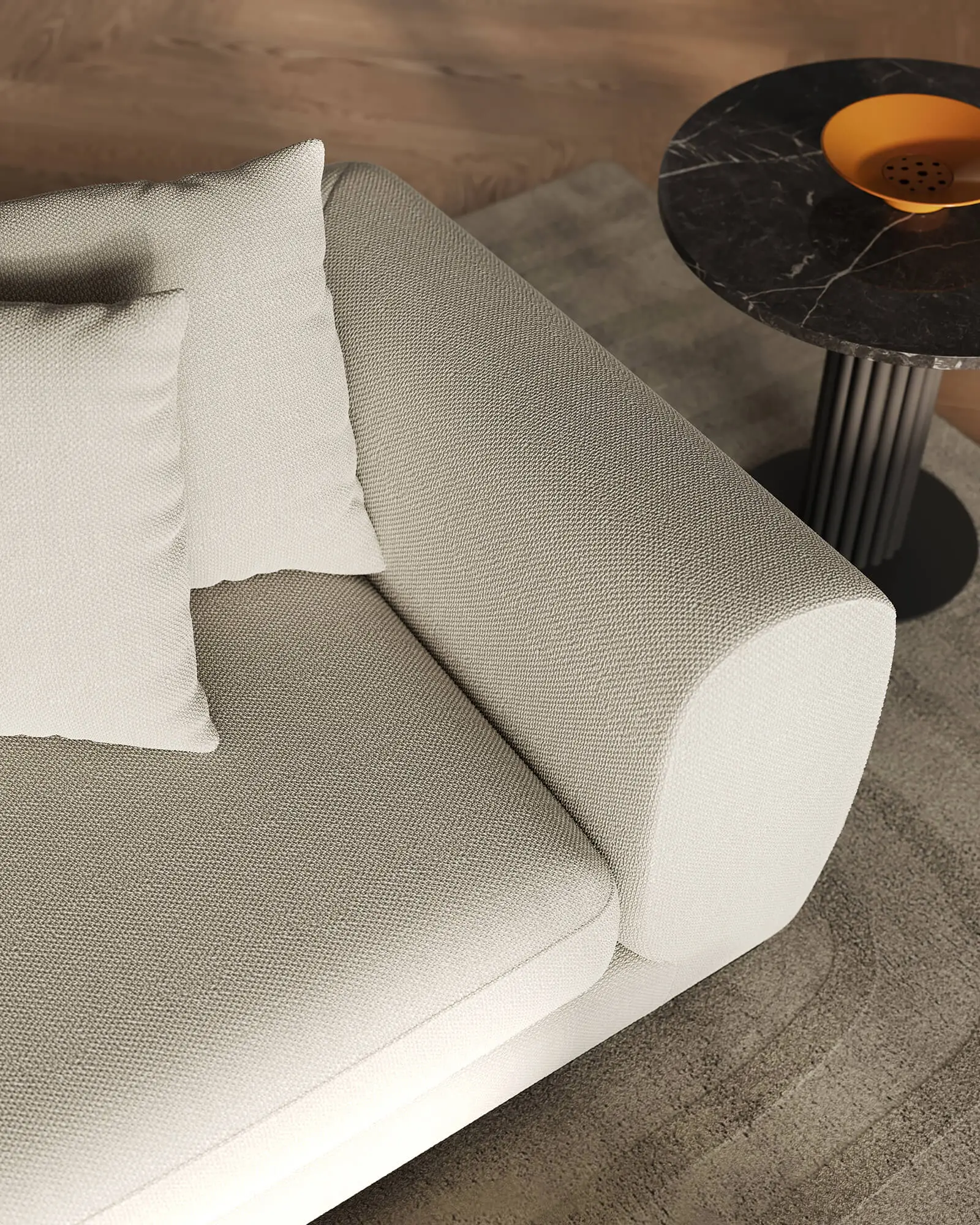
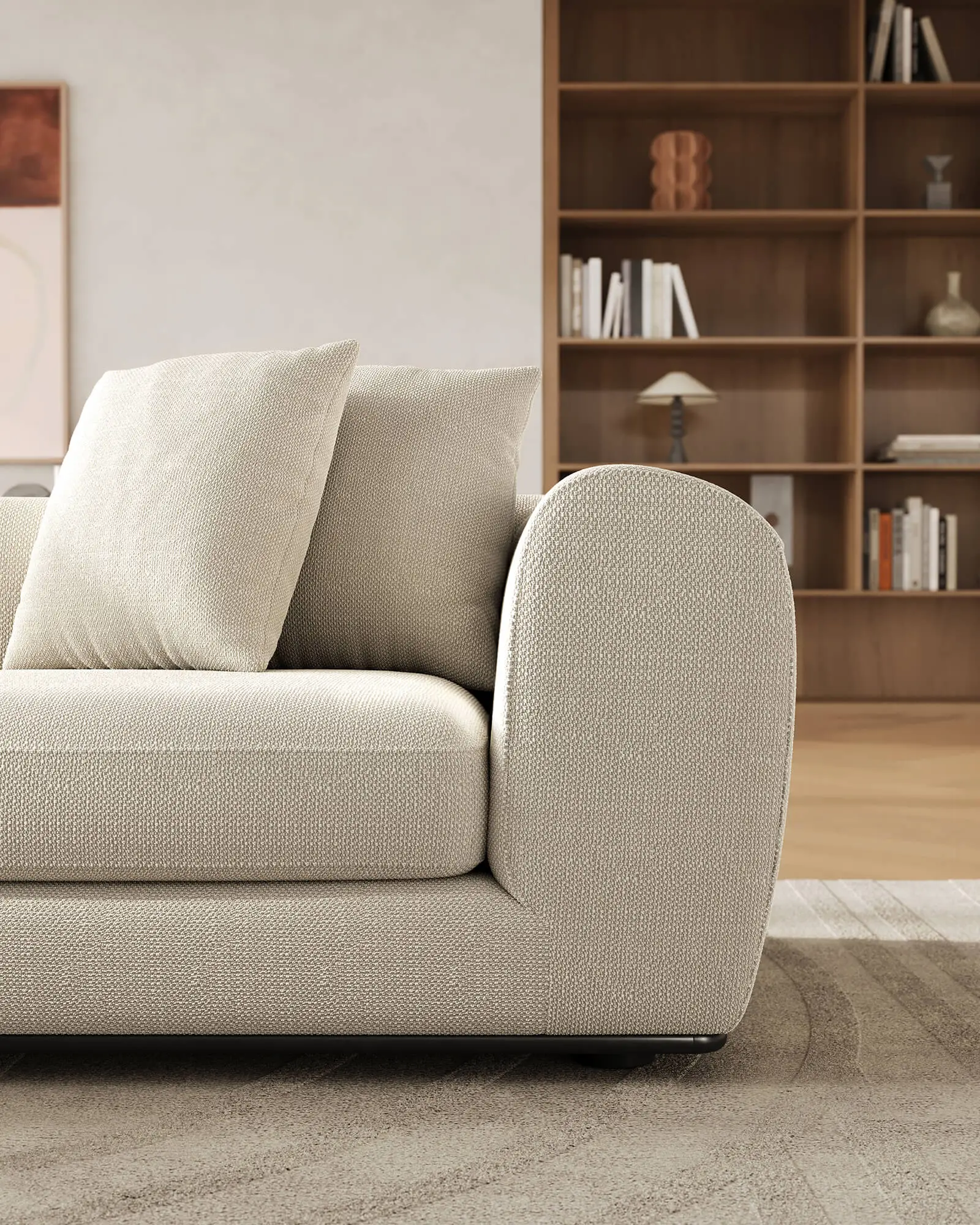
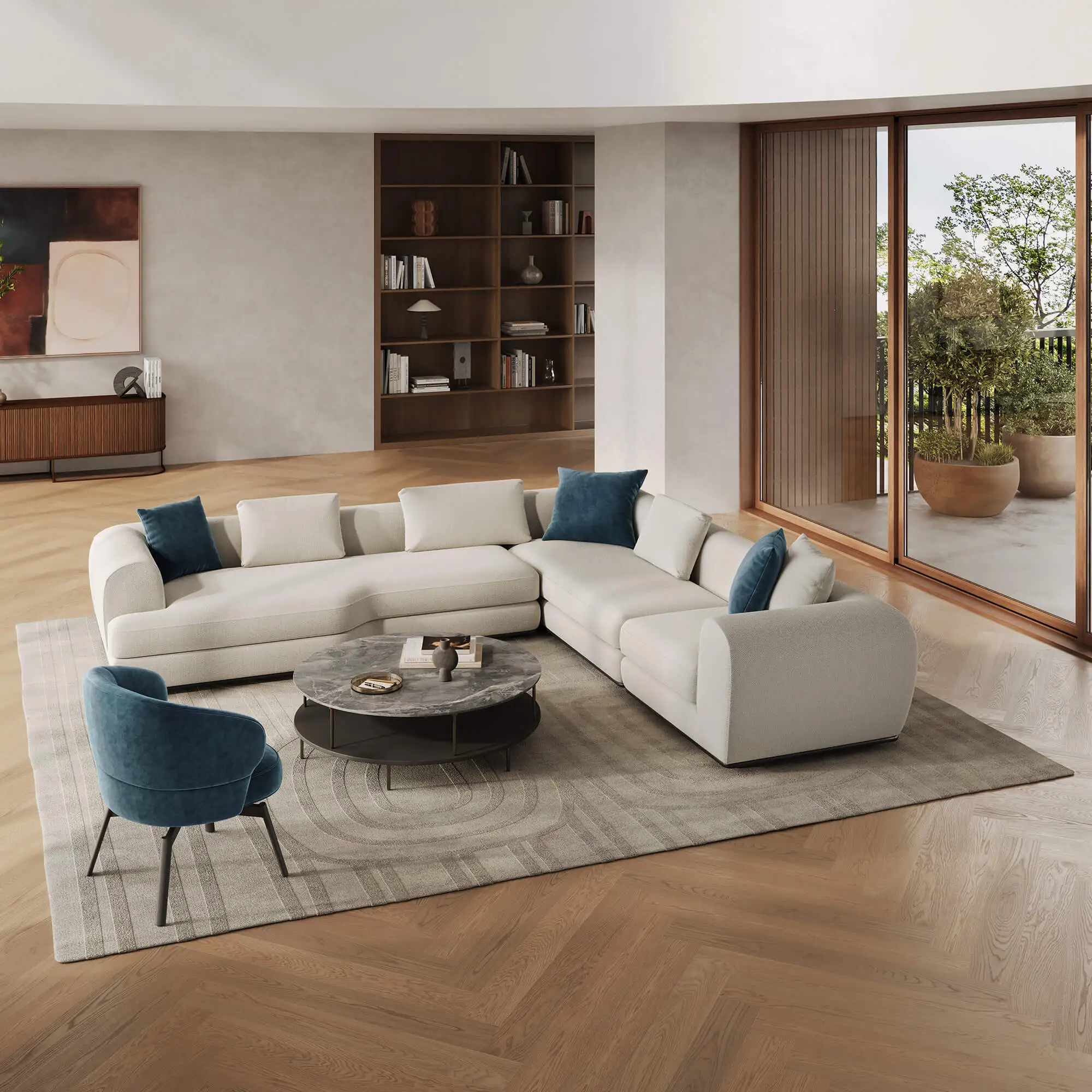
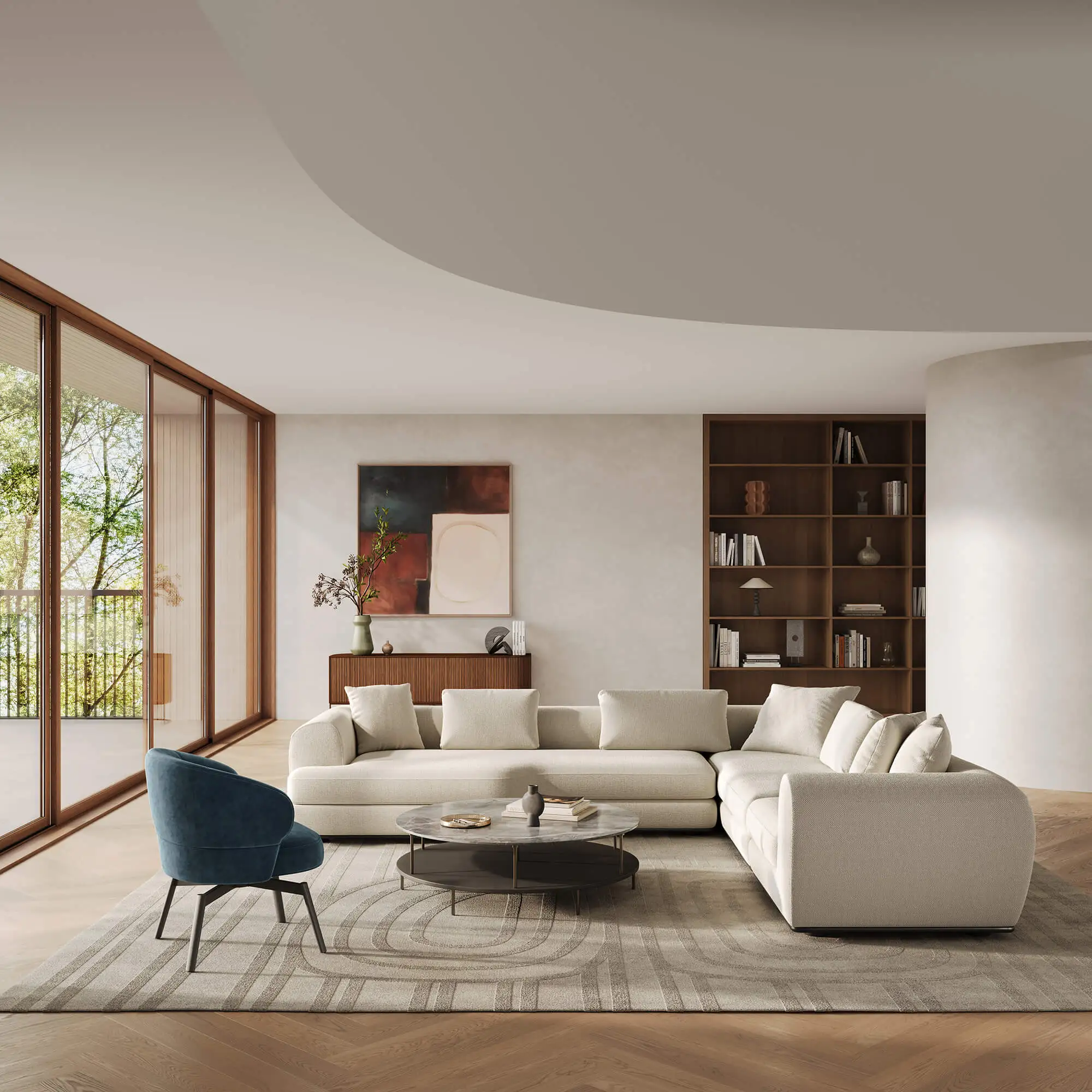
At Wittmann, craftsmanship and comfort belong together. For our images of Beletage, that meant paying attention to soft transitions, the volume of the cushions and the character of the upholstery. These qualities needed to read in both the full composition and the close-ups.
Beletage by Sebastian Herkner: form and configuration
Beletage is a generously proportioned modular sofa system. Curved and straight elements combine in different seating arrangements, while a recessed metal frame gives the upholstered forms a floating appearance. Sebastian Herkner designed the collection for Wittmann in 2025. The Beletage product page shows its construction and configurations.
A digital material from the original fabric
We scanned the original fabric, calibrated its color and built a PBR material. UV mapping, roughness maps and normal maps define how the fabric sits on the model and responds to light in the render. They let us refine the weave, sheen and surface texture. More on this process: material digitization.
Modeling and shading for close-ups
We recreated the sofa as a high-poly model, including seams, edge profiles, cushion volume and folds. The material uses physically based rendering; subtle contact shadows, also known as ambient occlusion, help define the transitions in the image. The close-ups reveal how geometry, materials and lighting work together. More on building these assets: 3D modeling.
From a shared moodboard to a brand environment
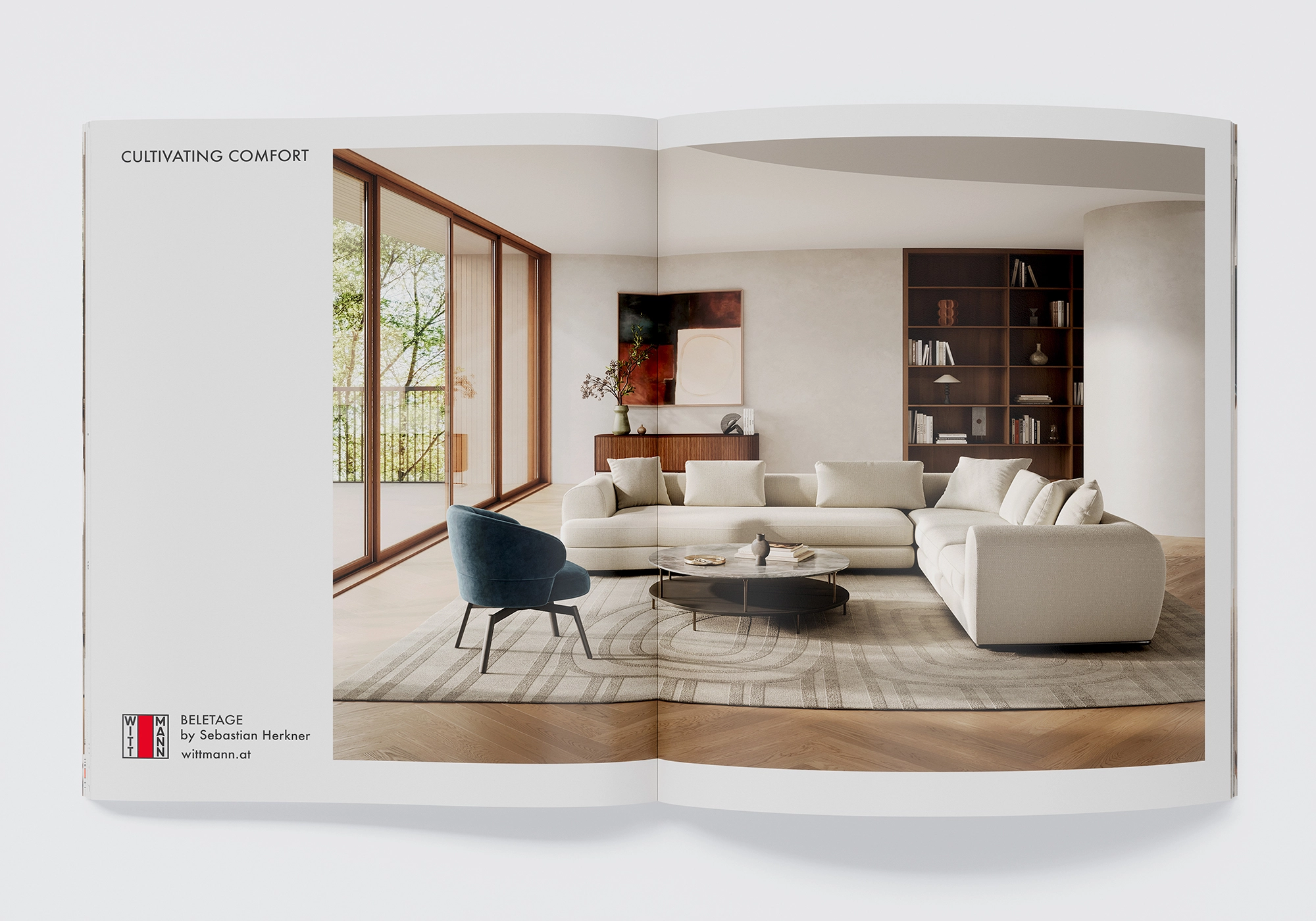
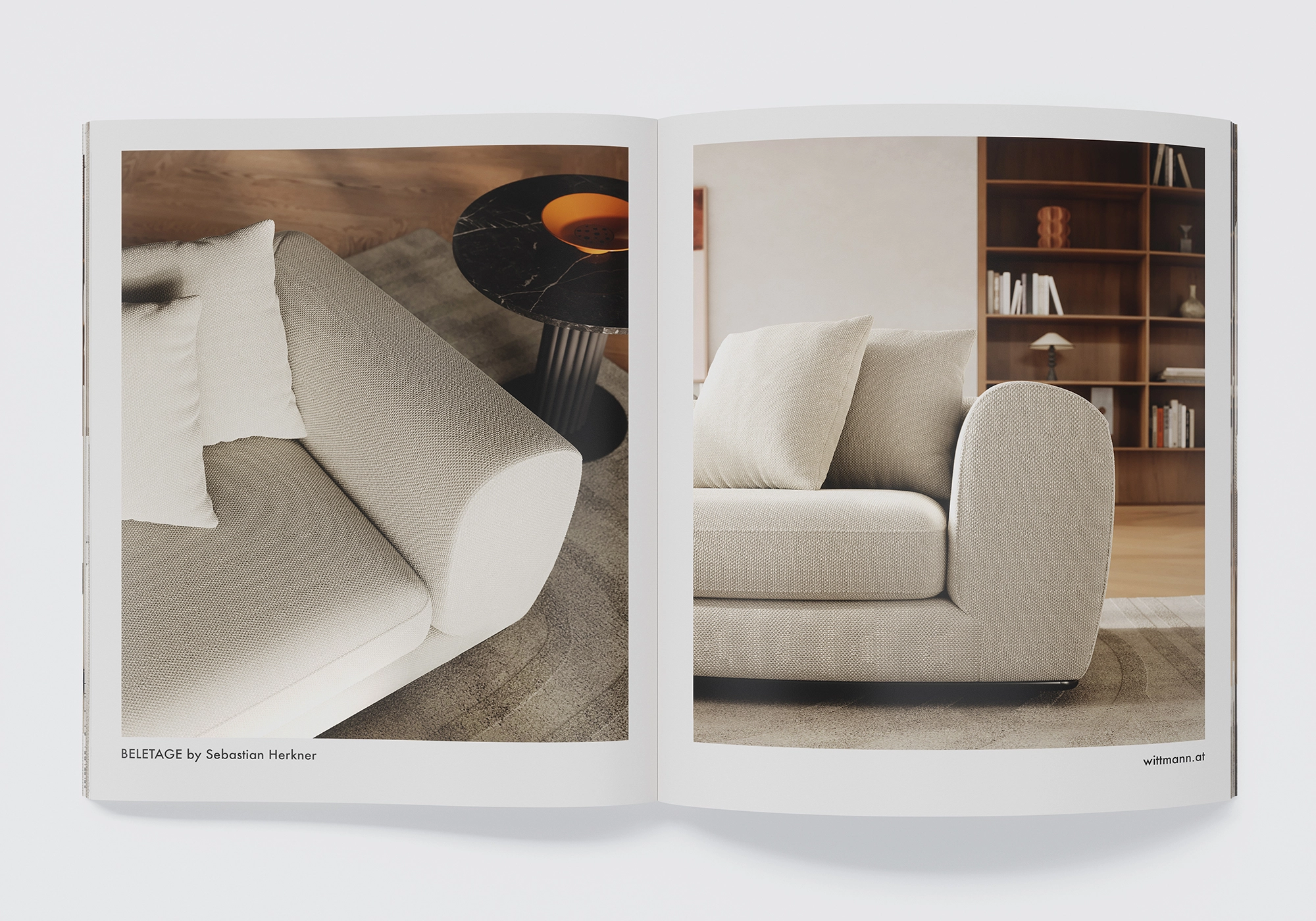
Working from a shared Miro board, we developed an interior with deep colors, warm wood, selected artworks and large windows for soft daylight. Two viewpoints structure the series: a front view of the sofa and a wider composition that places it in the room. Wittmann used selected images in an advertisement in HOME magazine, September 2025. More on our approach: interior visualization.