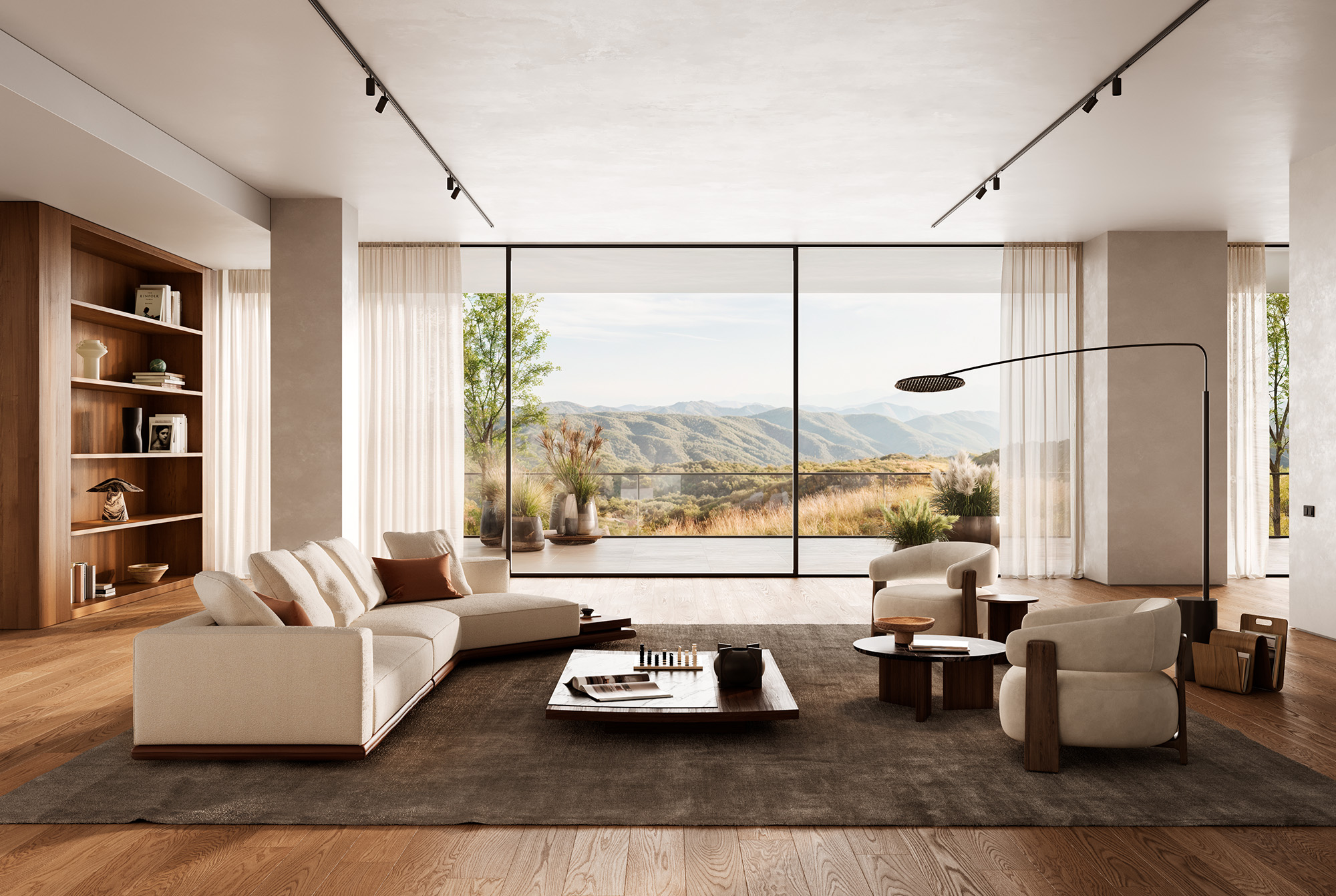
A piece of furniture must make a good impression in two ways: in the room and up close.
For this case study, we developed a series of CGI images: nine visuals, ranging from room views to close-ups of table edges. Behind this lies a question that every briefing must answer: What perspectives does a piece of furniture need to convey its appeal and make people want it?
The wide shot shows how a piece comes to life. The close-up shows what it’s worth. This only works if both shots come from the same visual world. Otherwise, the detail looks like a snippet from a different project.
A few materials, one visual world
Light-colored textiles and warm wood define the entire series, joined by a tabletop with subtle stone veining and a few dark accents. These elements recur in every image; the camera determines which comes to the foreground.
That is precisely where the value of a visual universe lies. A brand can use it to create content for both its campaigns and product pages without creating a disconnect between the channels.
The room provides a place for the furniture
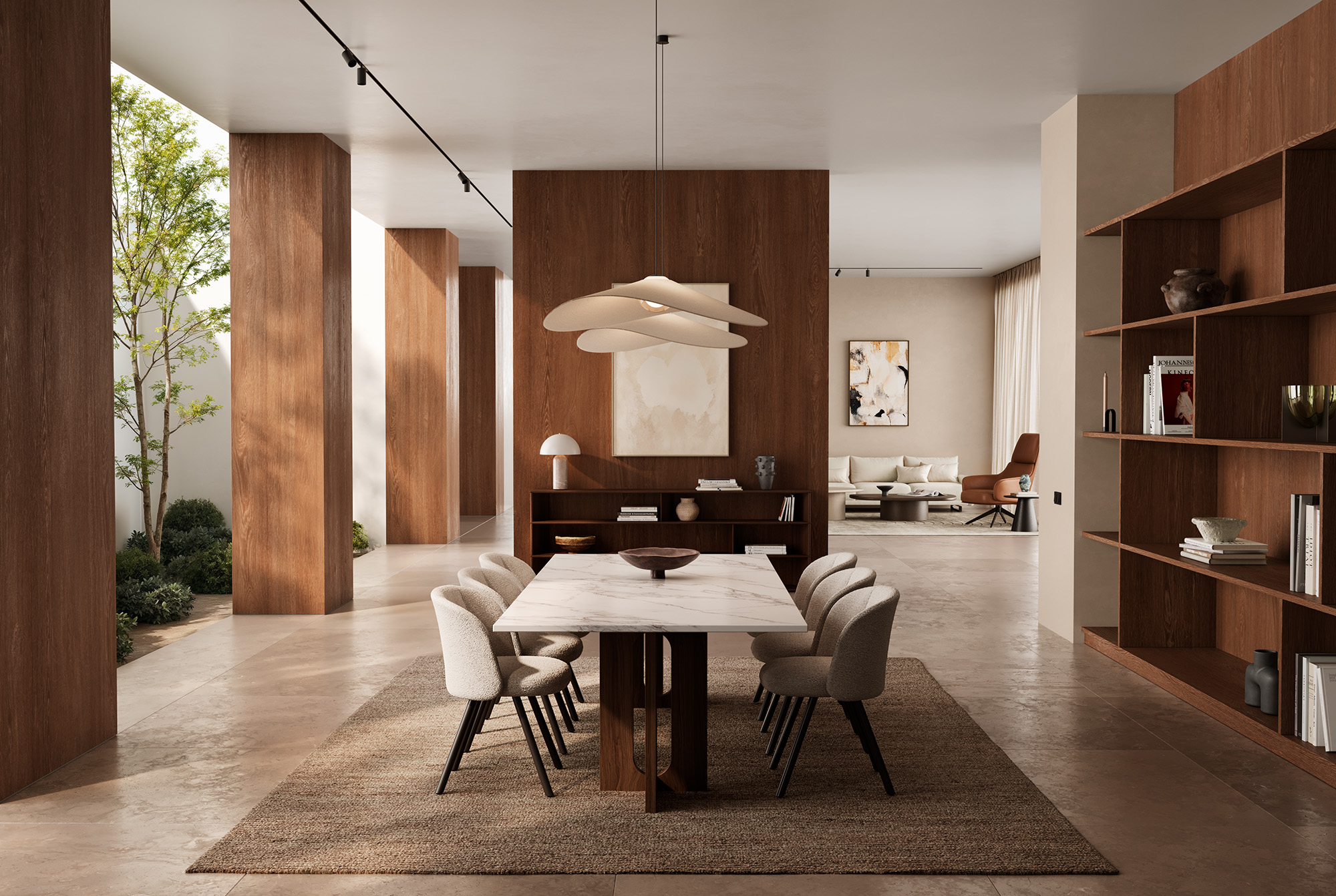
The architecture is open yet structured. Wood-clad columns divide the window facade; shelves and wall surfaces echo the same warm tone, with light-colored areas remaining open in between. In the dining area, the long tabletop and the tracks on the ceiling draw the eye into the depth of the room. In the living area, the space opens up to the landscape beyond the window.
More important than any single object is the space between them. Accessories are used sparingly; no surface is cluttered. A piece of furniture needs breathing room to be appreciated, and a room where every corner is decorated looks more like a stage set than a home.
What distance conceals
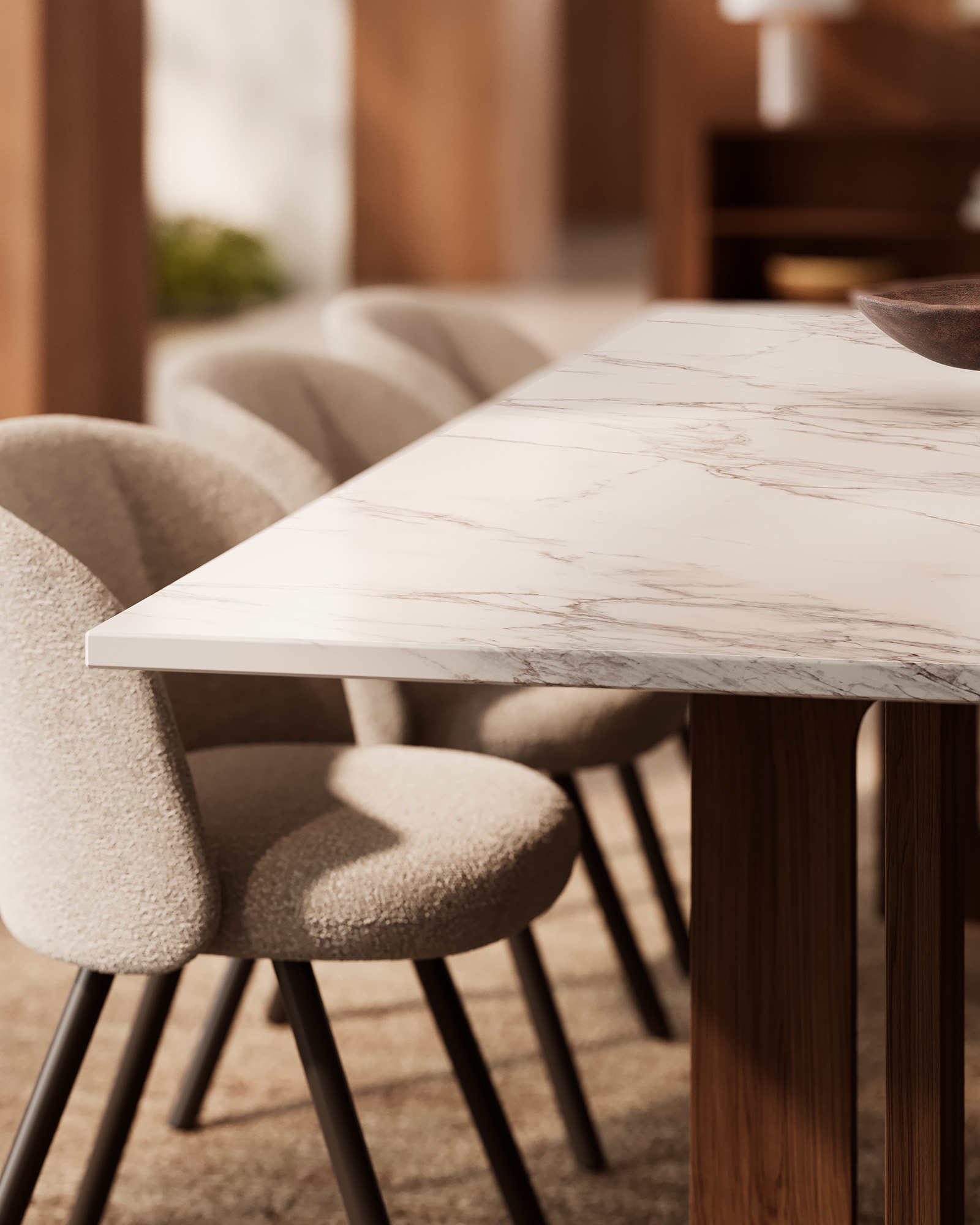
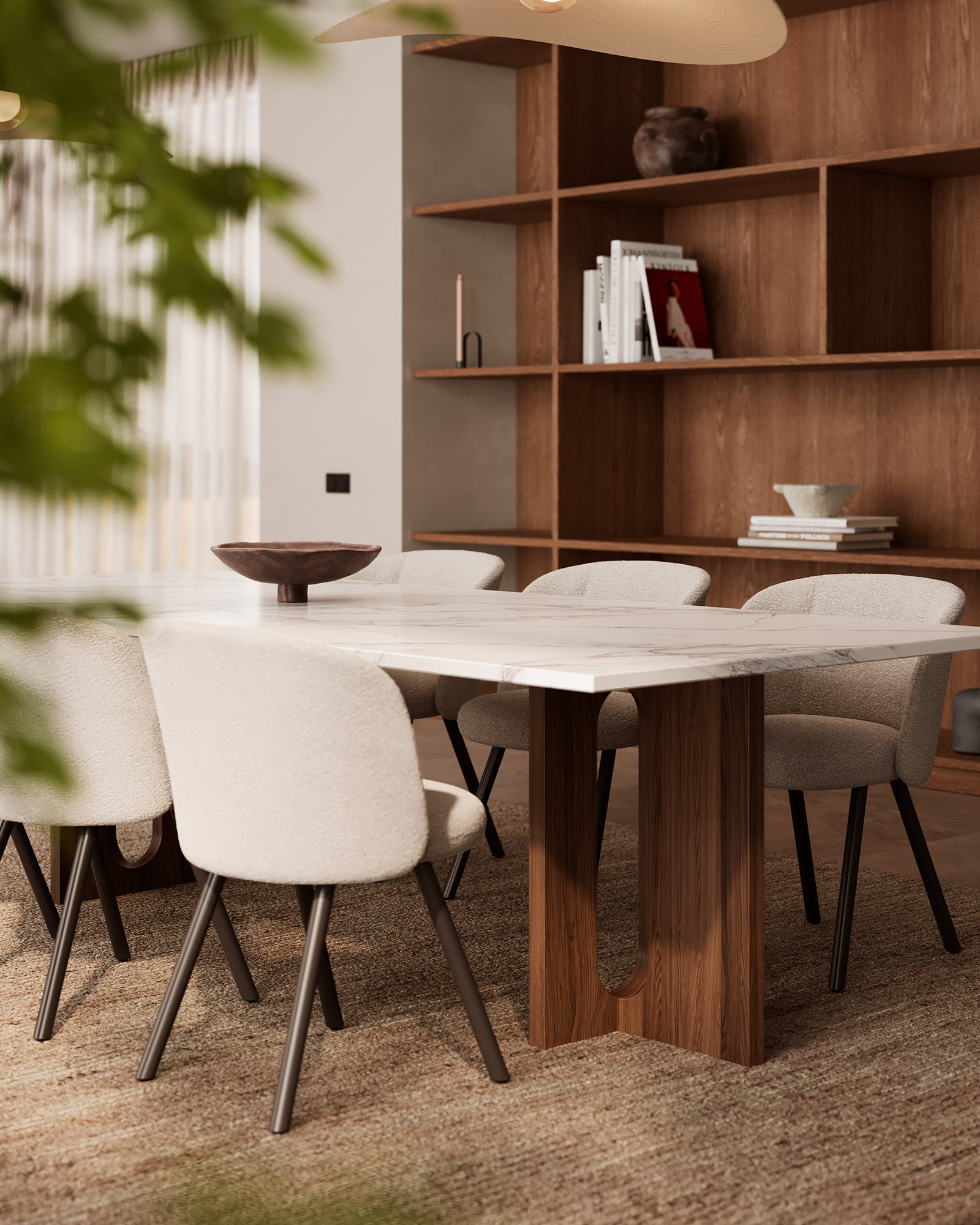
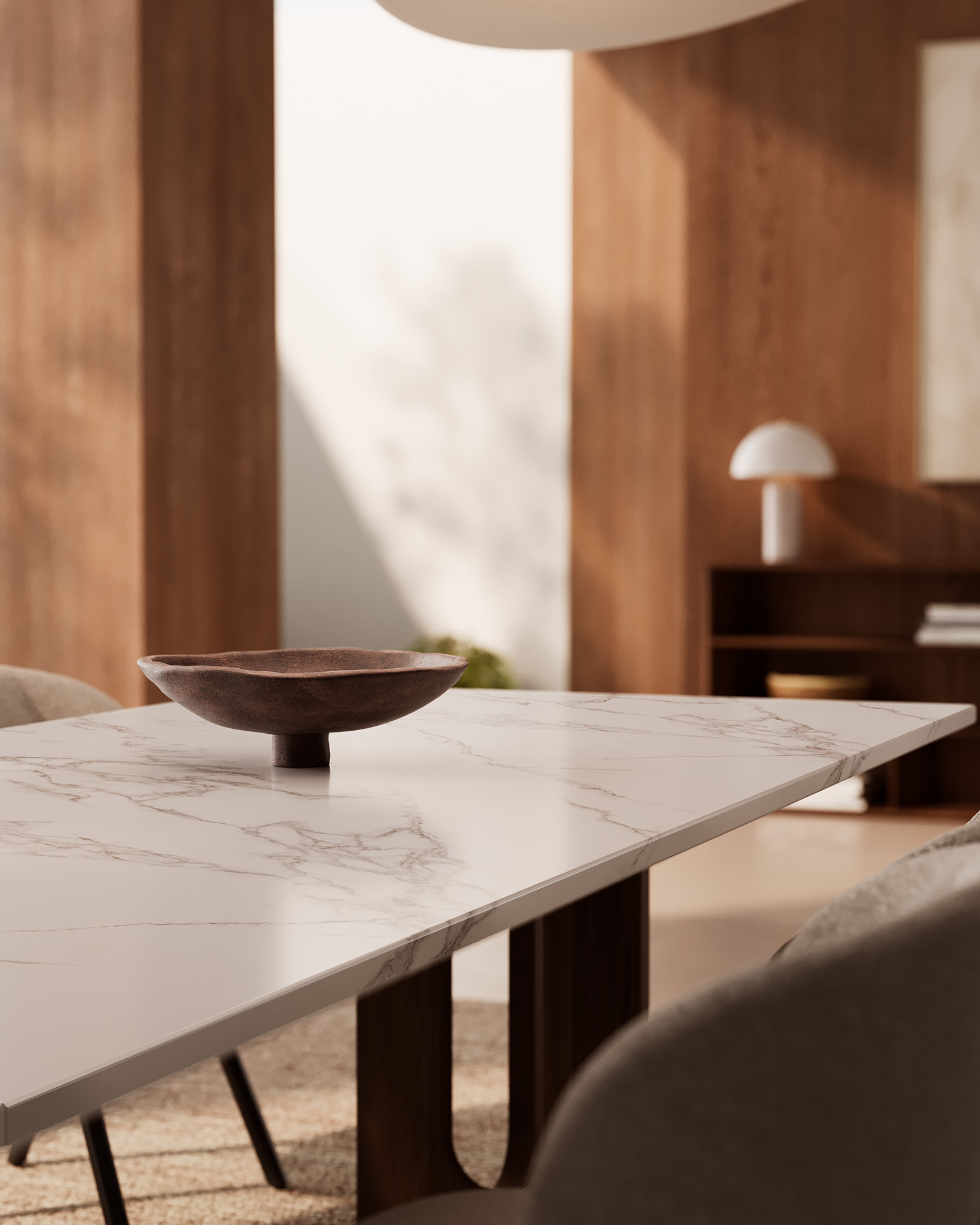
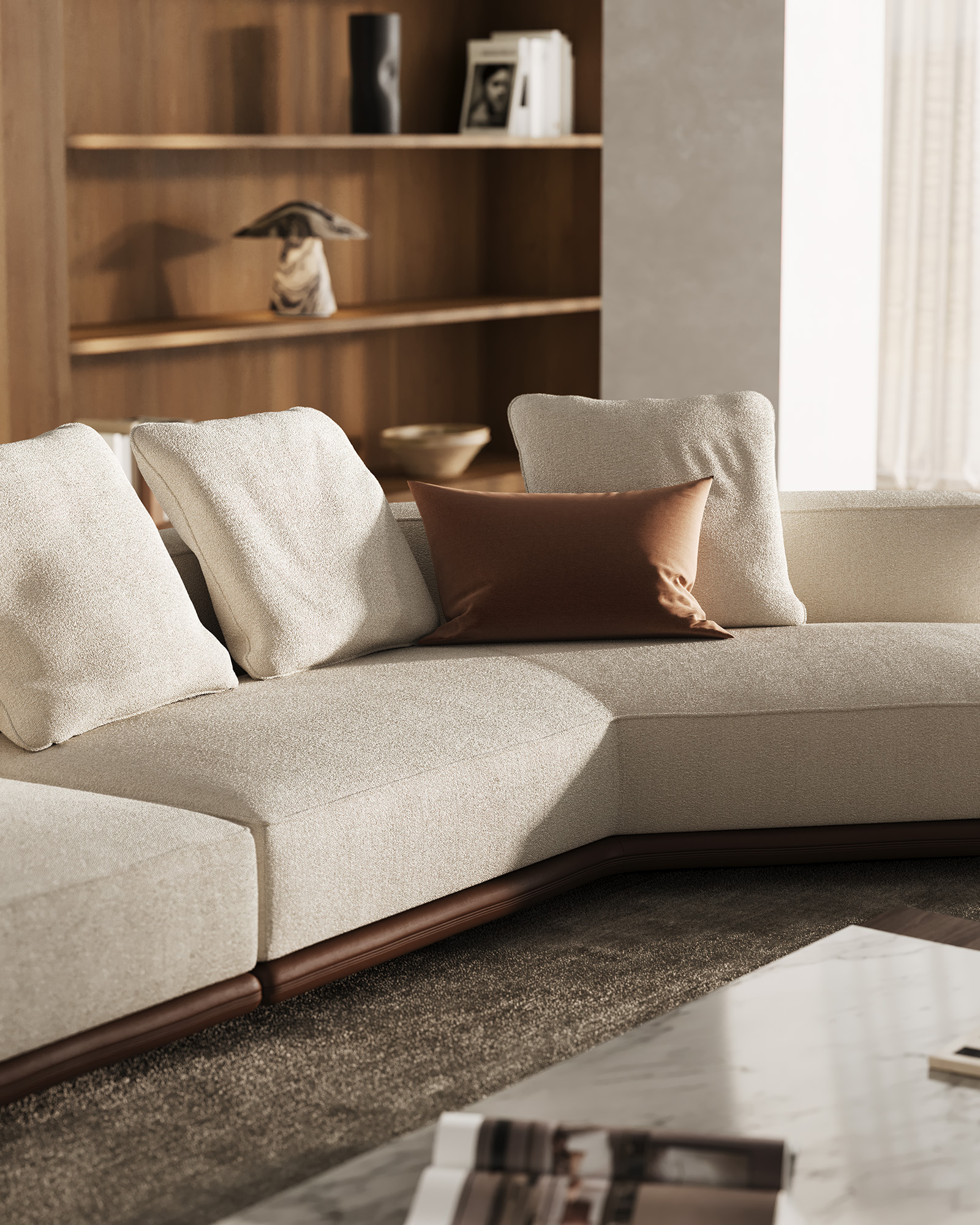
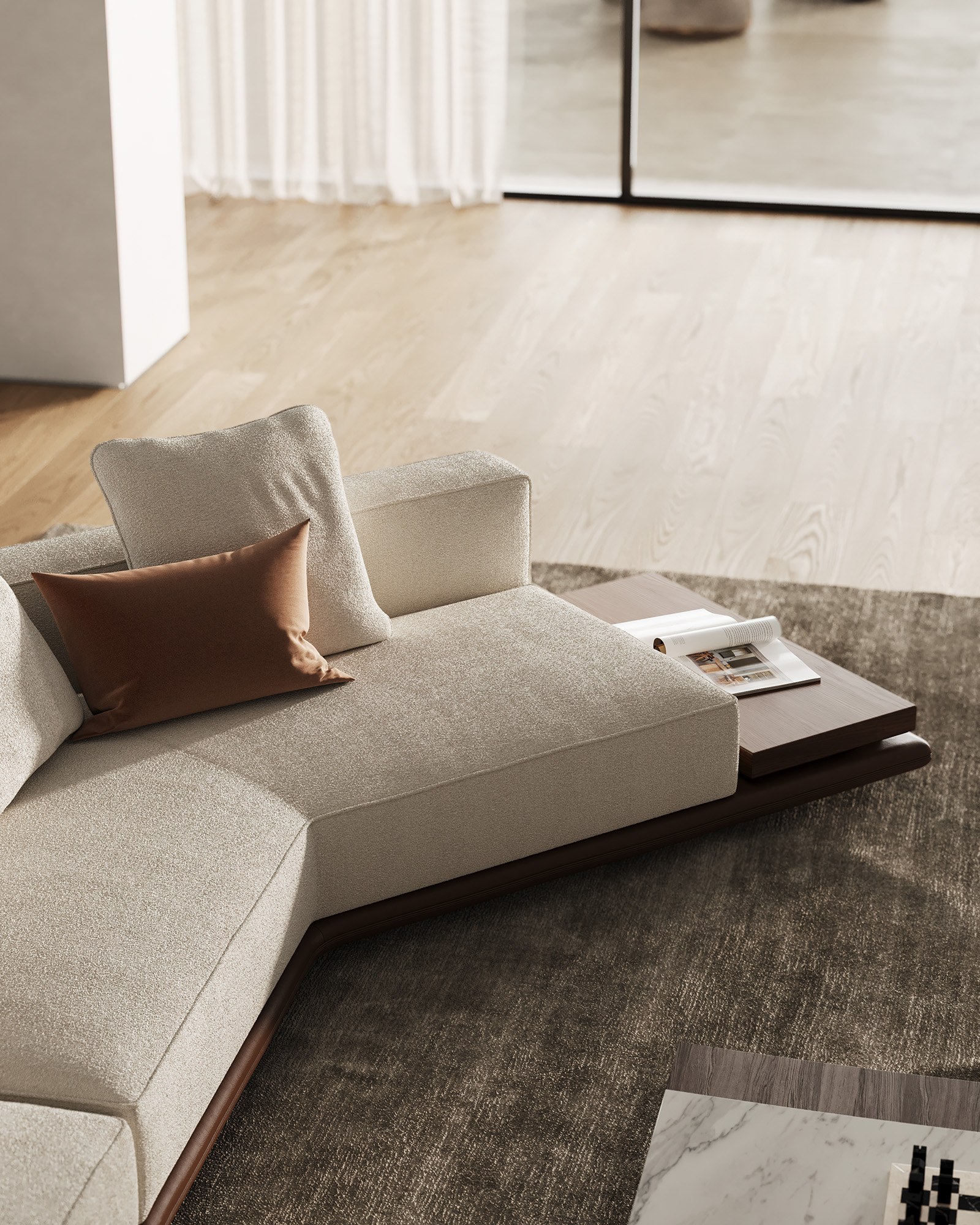
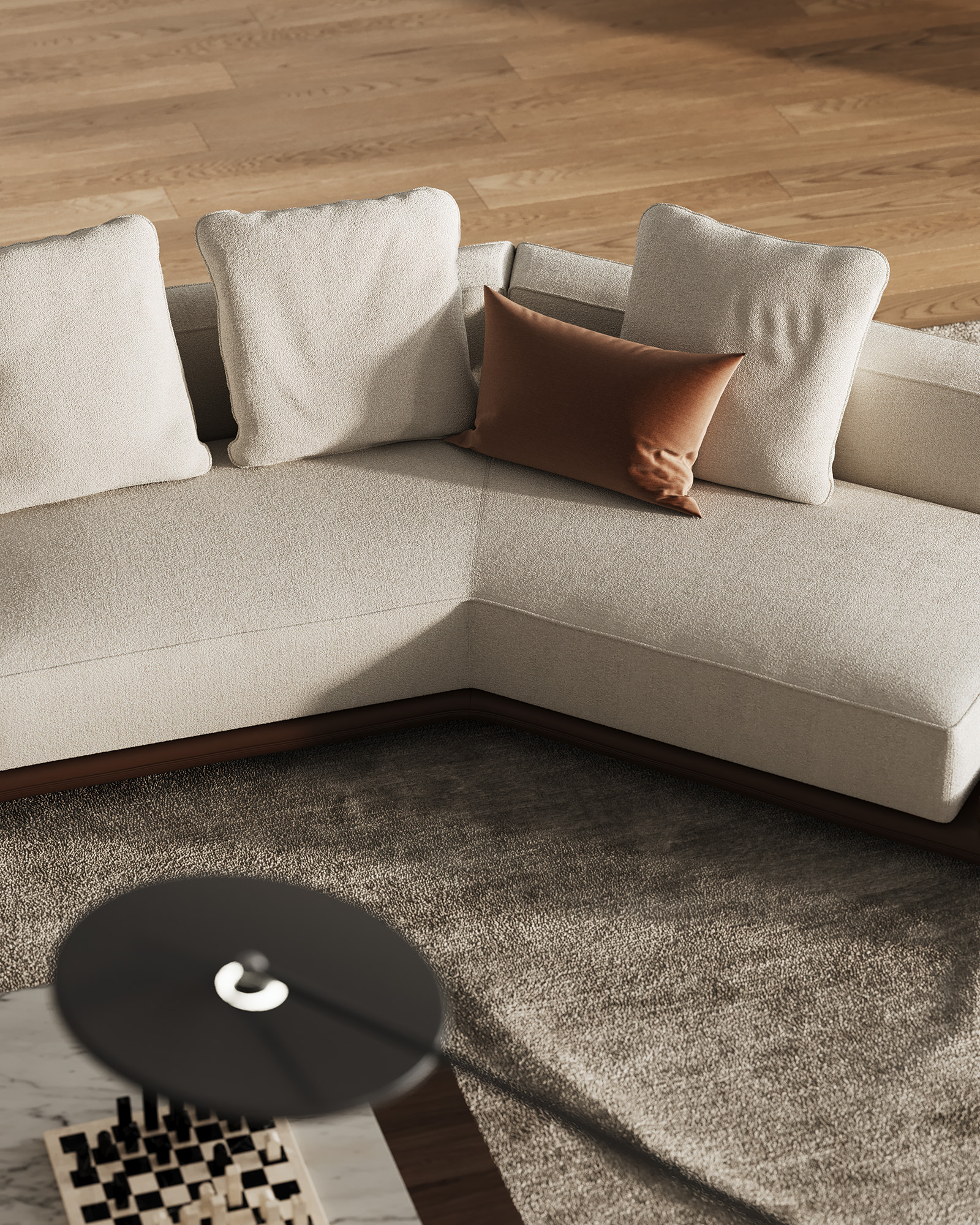
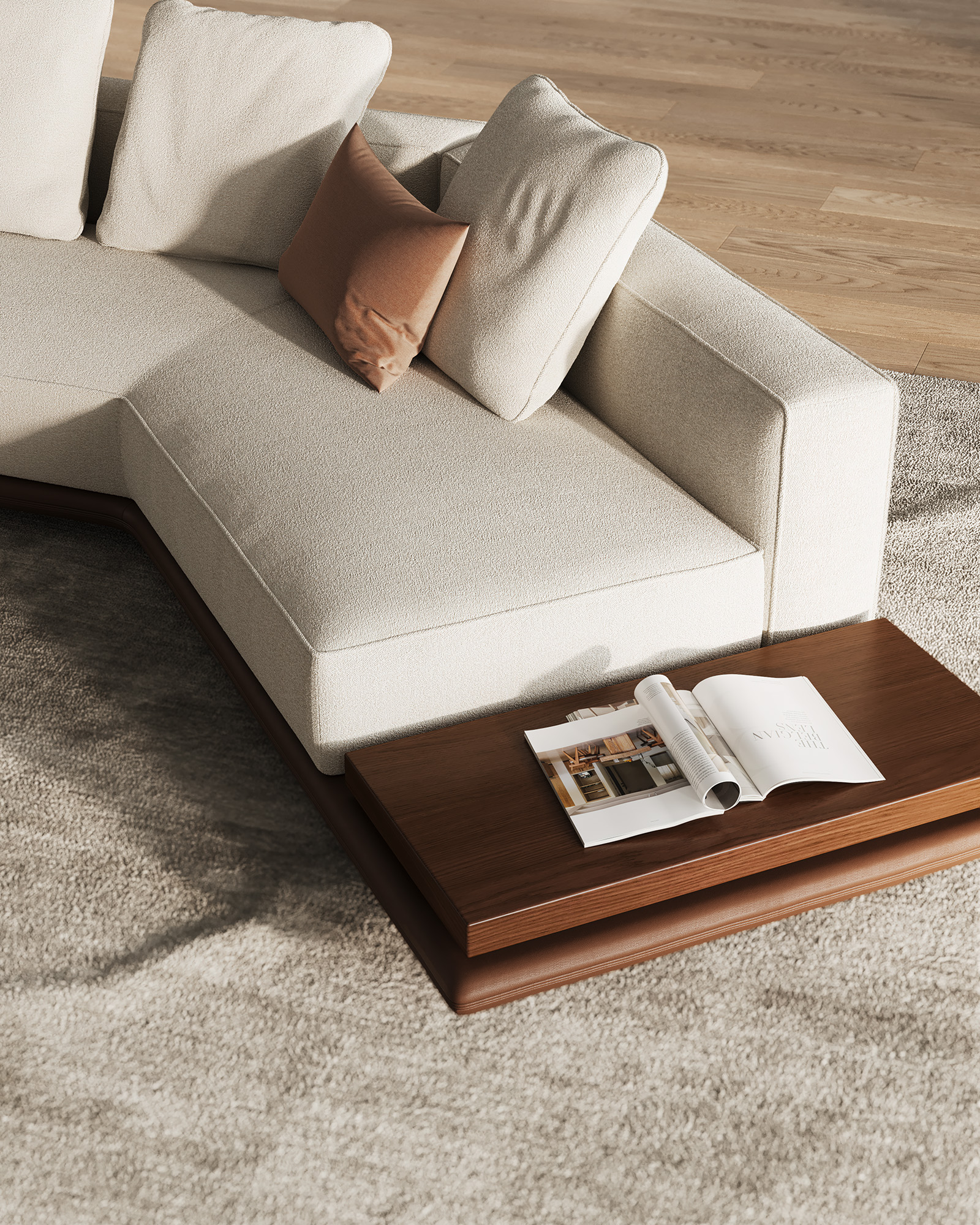
In the room view, the edge of the table almost disappears. Up close, it becomes the subject. Fine veins run through the light-colored top, its straight edge framing the movement of the pattern. Below it, the curved chair upholstery reveals its grainy texture in side lighting. On the sofa, the pale surface resolves into seat and back cushions, with loose cushions resting above a dark wood base.
The vertical compositions isolate individual pieces of furniture from the overall arrangement, yet leave traces of their surroundings: a section of a shelf, a curtain, the edge of a rug. In this way, even the details remain part of the room.
The room view and the detail belong together
In CGI, a camera can be positioned later in the process. Whether a close-up will work, however, is decided earlier. Materials and lighting need to be developed for that proximity; otherwise, the detail mainly reveals that it was never planned.
In this visual world, the close-ups reveal what recedes into the background in the wide-angle view: the texture of the sofa cover, the edge of the tabletop, and the interplay between upholstery and wood. The recurring materials tie the individual motifs together into a series.
The accompanying behind-the-scenes article on a CGI project in three steps explains how a project develops from product references to finished imagery.